|
|
|
|
Hey there!
It's hard to believe that Shekla Studios has already been out in the world for a month.
June has been full of firsts: new projects, new forms, new tools, plenty of glaze tests, and a few exciting opportunities on the horizon. Thank you to everyone who has followed along, shared kind words, placed an order, or simply cheered me on. It means a lot, so thank you!
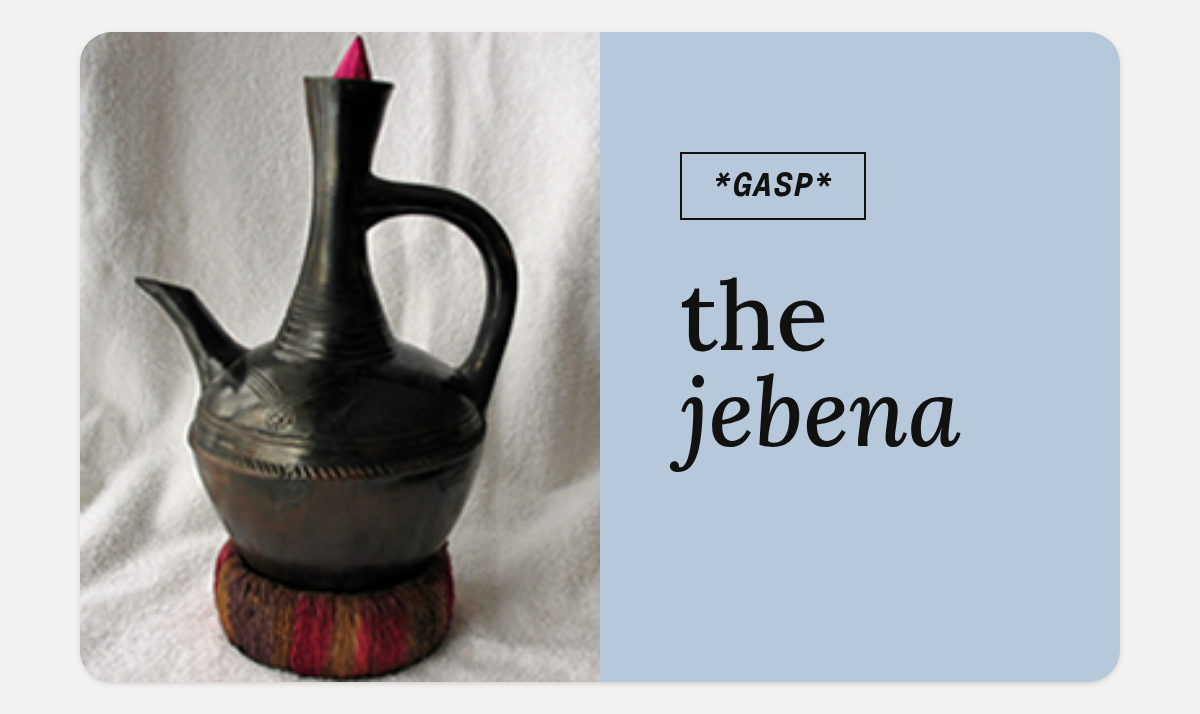
The biggest project in the studio right now has been, without a doubt, the Ethiopian coffee set with the focal piece, the jebena. |
|
|
|
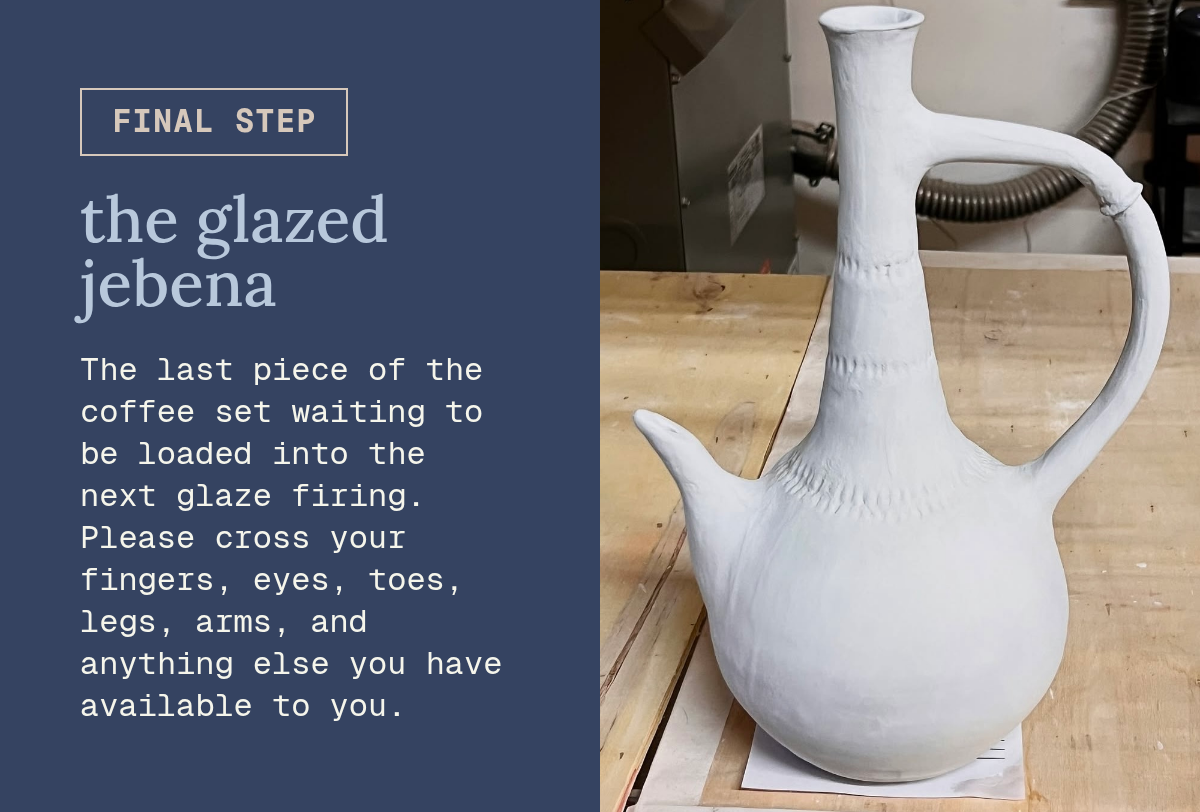
If you're not familiar, a jebena is the traditional clay pot used to brew coffee during Ethiopian coffee ceremonies.
It has a distinctive long neck and rounded body, and is traditionally made in warm terracotta reds, deep chocolate browns, or rich black finishes, like the example above.
For this piece, I wanted to stay true to the traditional form while adding a bit of my own personality through the glaze. But before any glaze ever touches the clay, there's a surprisingly long journey. |
|
|
|
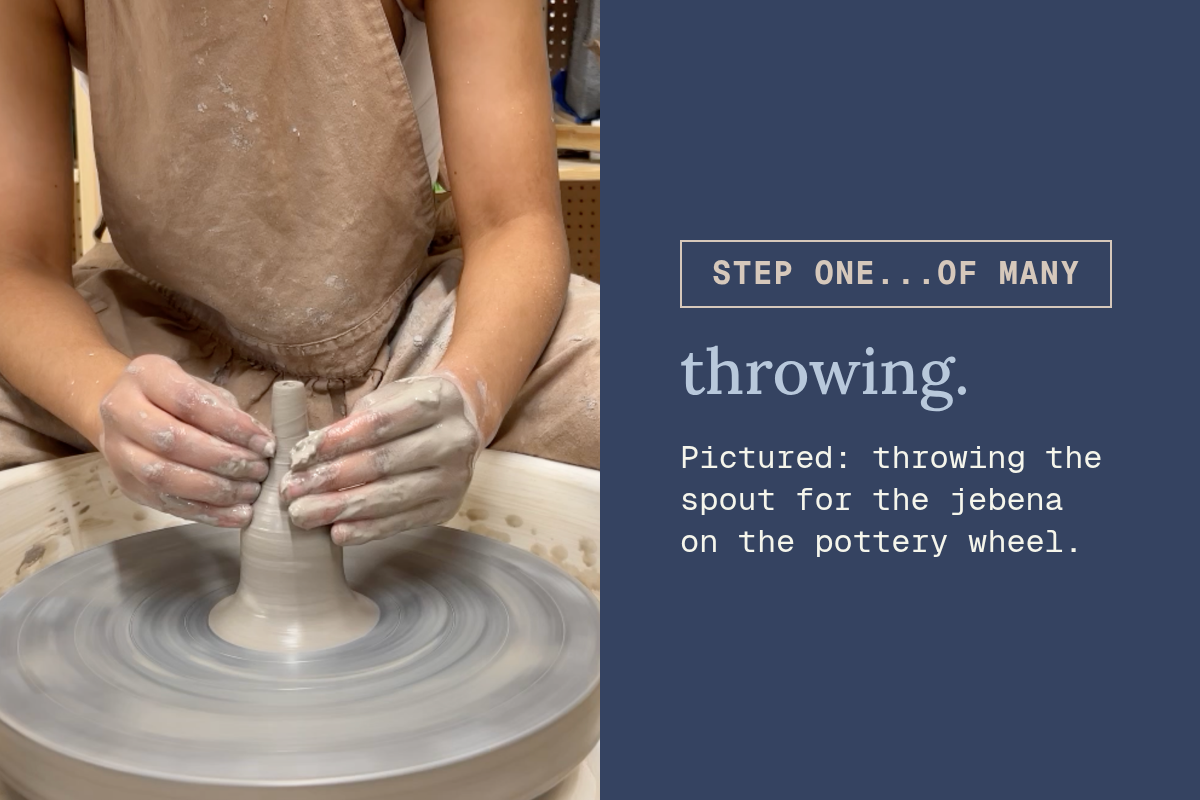
The process begins by throwing the body in two separate sections, creating two matching bowls that are later joined to form the rounded belly of the pot. The spout is thrown separately, while the handle is built entirely by hand off the wheel.
Hand-building has never been my favourite part of pottery (I much prefer the wheel), but some forms simply can't be made any other way.
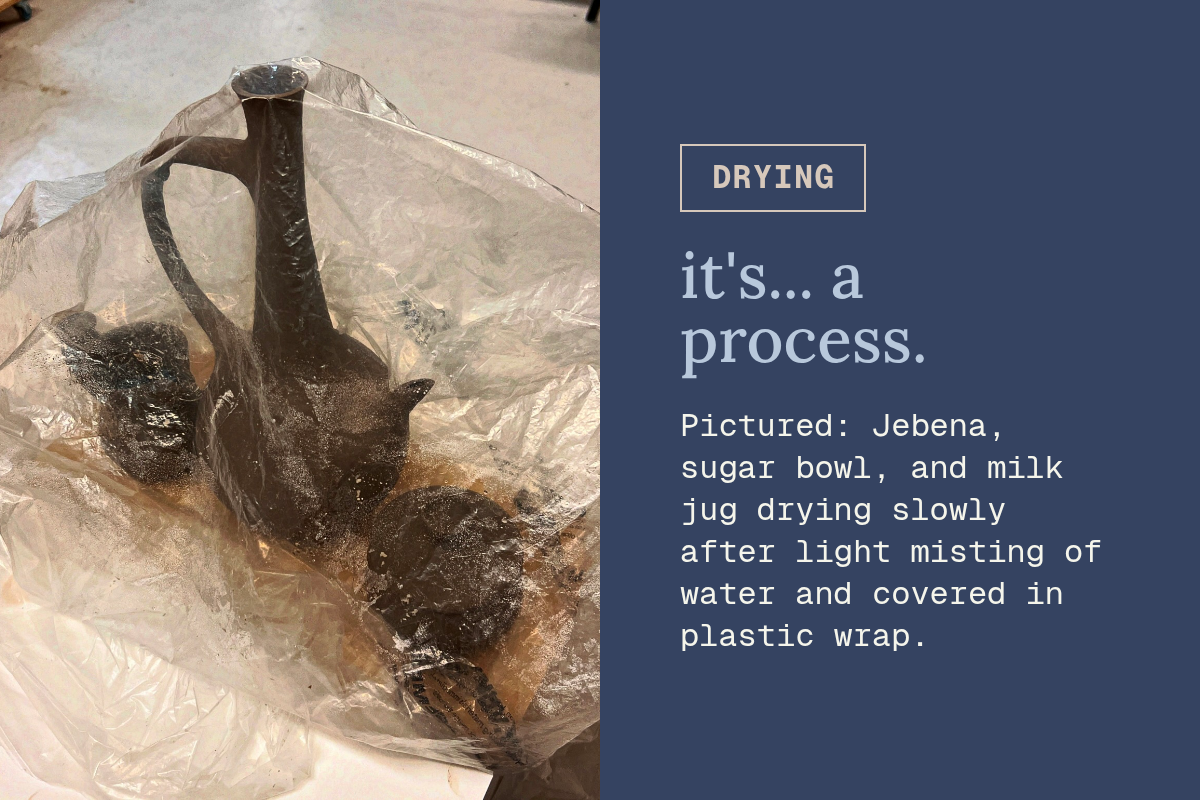
Then comes what feels like pottery's unofficial full-time job: waiting for clay to dry.
|
|
|
|
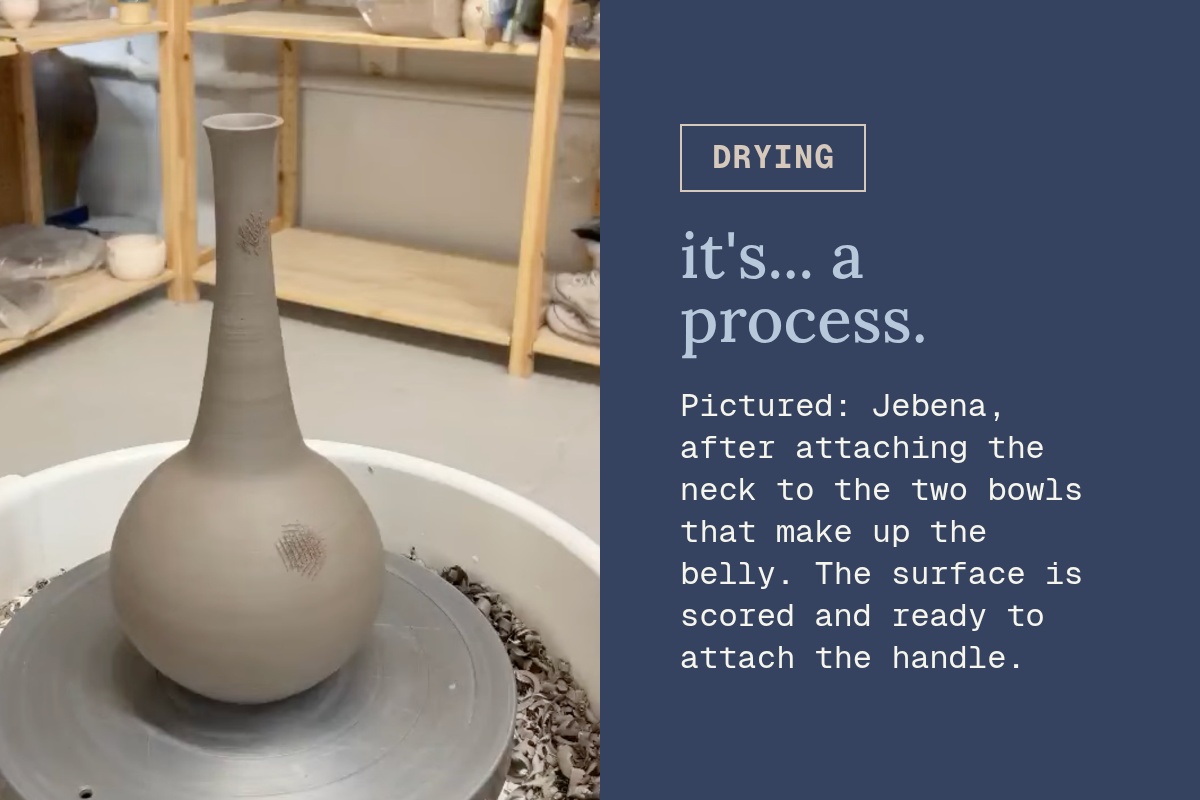
Every component dries at its own pace depending on its size and thickness, so timing becomes everything. Each piece needs to reach the leather-hard stage—firm enough to hold its shape, but still soft enough to bond securely with the others.
Once everything reaches that sweet spot, I score the surfaces like in the photo above, apply slip (a mixture of clay and water that acts like glue), join the pieces together, smooth the seams... and hope the pottery gods are feeling generous that day.
After that comes trimming and refining the form, more careful drying, attaching the handle and spout, carving the surface details (with some fun new carving tools!), and then—you guessed it—even more drying. |
|
|
|
​Once the piece is completely dry, it goes through its first firing (the bisque firing), transforming from clay into ceramic. After that, each piece is glazed before heading back into the kiln for its second firing at over 1,200°C, where the glaze melts into the glass-like surface we all recognize.
That second firing is always the moment of truth. Once the kiln door closes, there's nothing left to do but trust the process. |
|
|
|
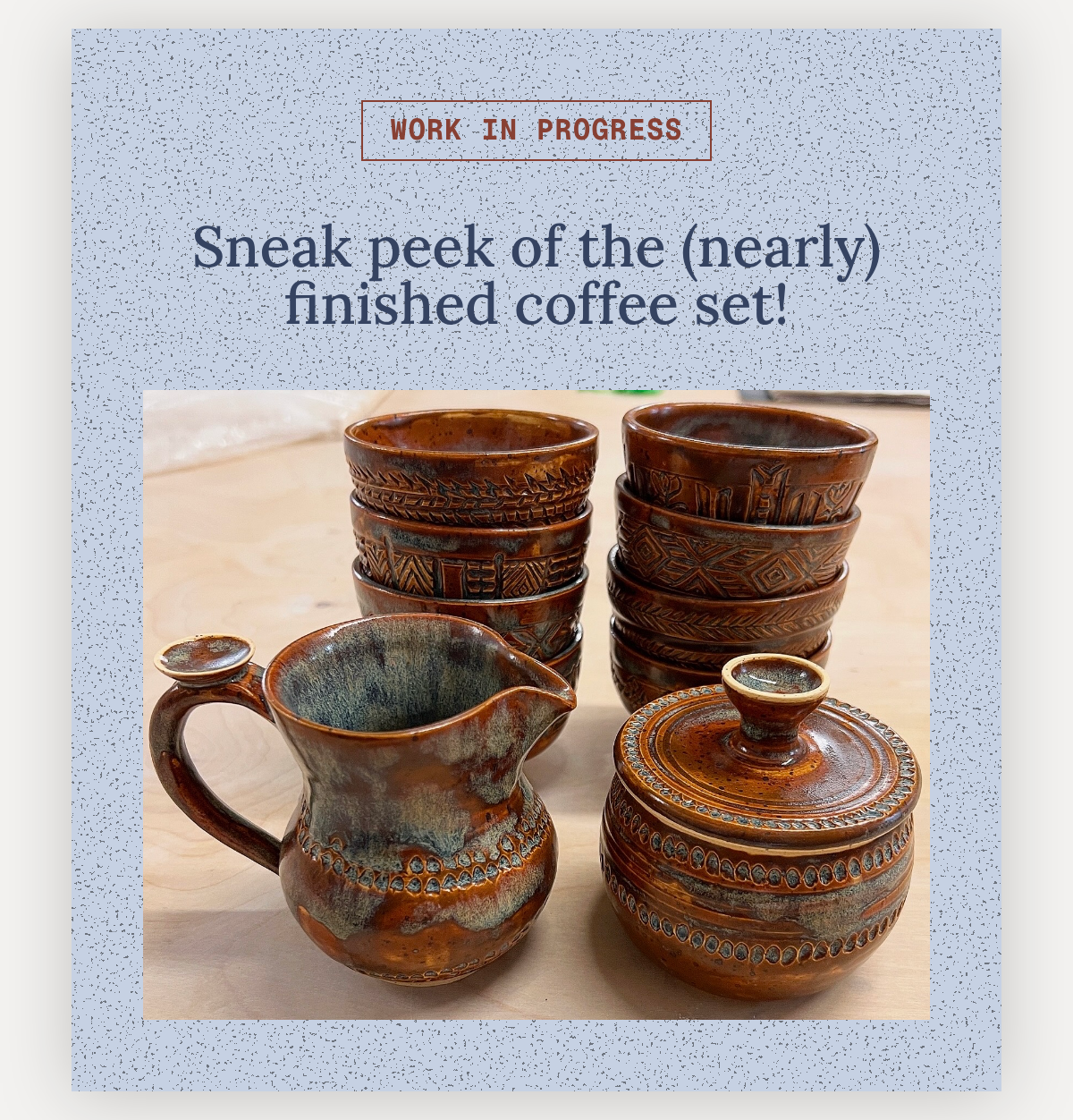
The full Ethiopian coffee set includes carved coffee cups, saucers, a sugar bowl, a milk jug, and—at the time I'm writing this—the final piece still in the kiln: the jebena itself.
It's months of work for a single set, but seeing it all come together makes every step (even the slow drying process) worthwhile. |
|
|
|
|
|
|
Shekla Studios, Ontario, Canada |
|
|
|
|










0 comments